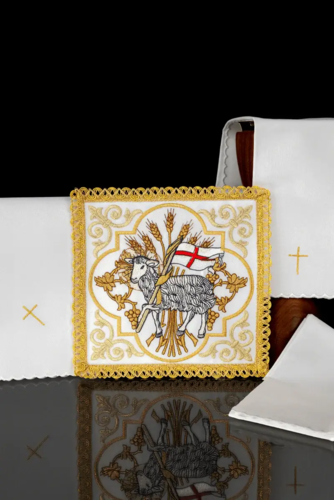
The Easter season is a time of profound theological significance, marked by symbols that resonate deeply within Christian tradition. Among these, the figure of the Lamb, particularly the Easter Lamb, holds a central and powerful place. Its presence on liturgical vestments, such as chasubles and stoles, is not merely decorative but carries a rich tapestry of meaning. This article delves into the symbolism of the Easter Lamb as depicted on these sacred garments, exploring its theological underpinnings and its enduring relevance for clergy and the faithful alike.
The Lamb in Scripture: A Foreshadowing of Salvation
The association of the lamb with sacrifice and salvation predates the New Testament. In the Old Testament, the Passover lamb, sacrificed to protect the Israelites from the final plague in Egypt, serves as a foundational symbol. Its blood, applied to the doorposts, marked the homes of the faithful, signifying deliverance and redemption. This act foreshadowed a greater sacrifice, a divine Lamb who would ultimately redeem humanity.
The Passover Lamb and its Typological Significance
The Passover narrative is a critical precursor to understanding the Easter Lamb. The unblemished lamb, whose blood averted death, established a pattern of sacrificial substitution. This ritual was a constant reminder of God’s covenant and His power to deliver His people from bondage. This ancient imagery deeply influenced early Christian thought, providing a framework for interpreting the sacrifice of Jesus Christ.
John the Baptist’s Declaration: “Behold, the Lamb of God!”
The Gospel of John famously introduces Jesus with the powerful proclamation: “Behold, the Lamb of God, who takes away the sin of the world!” (John 1:29). This declaration immediately links Jesus to the sacrificial lamb tradition, but elevates it to a cosmic level. He is not just a lamb for a single household or nation, but the ultimate sacrifice for the sins of all humanity. This designation is paramount in understanding His role in salvation history.
Jesus Christ: The Ultimate Easter Lamb
The resurrection of Jesus Christ, the central event of Easter, solidifies His identity as the true Easter Lamb. His sacrifice on the cross is seen as the fulfillment of the Old Testament prophecies and types. He is the unblemished sacrifice, whose death and resurrection bring about liberation from sin and death, and usher in eternal life for believers.
The Unblemished Sacrifice
Throughout scripture, the sacrificial lamb was required to be without blemish. This characteristic points to the perfect purity and sinlessness of Jesus Christ. His sacrifice was complete and sufficient, offering a perfect atonement for the sins of the world. This purity is a key aspect of His divine nature and His role as redeemer.
Victory Over Sin and Death
The resurrection is the ultimate proof of the Lamb’s victory. It demonstrates that death has no power over Him and that His sacrifice was accepted. The Easter Lamb, therefore, symbolizes not only sacrifice but also triumph, hope, and new life. This victory is the cornerstone of Christian faith and the very essence of the Easter message.
The Easter Lamb on Chasubles and Stoles: A Visual Catechesis
The depiction of the Easter Lamb on liturgical vestments serves as a visual sermon, a constant reminder to both the wearer and the congregation of Christ’s redemptive work. These garments are not merely clothing; they are sacred instruments that convey theological truths.
Symbolism in Design and Embellishment
The artistic rendering of the Easter Lamb can vary, but common elements often include:
- The Lamb itself: Often depicted with a banner, symbolizing its victory over death.
- The Cross: Frequently associated with the Lamb, representing the instrument of its sacrifice.
- The Aureole: A halo or radiant circle, signifying divinity and glory.
- The Colors: White and gold are often used, representing purity, divinity, and victory.
These symbolic elements, when woven into the fabric of a chasuble or embroidered onto a stole, create a powerful visual narrative of the Easter message. The fine craftsmanship and careful selection of motifs underscore the importance of the message being conveyed.
Chasubles: The Vestment of Sacrifice
The chasuble, worn by the priest during Mass, is the principal vestment. Its design often emphasizes the sacrificial aspect of Christ’s offering. The presence of the Easter Lamb on a chasuble directly links the celebration of the Eucharist to the ultimate sacrifice of Christ, reminding the priest of his role as an instrument of divine grace and the congregation of their participation in Christ’s redemptive act.
Stoles: The Symbol of Ministry and Authority
The stole, a long band worn over the shoulders, signifies the priestly office and authority. When adorned with the Easter Lamb, it highlights that the priest’s ministry is rooted in Christ’s sacrifice and resurrection. It is a reminder that the authority to preach the Gospel and administer the sacraments derives from the victorious Lamb of God.
Contemporary Relevance and Devotion
In contemporary liturgical practice, vestments featuring the Easter Lamb continue to be a cherished choice, particularly during the Easter season and for important feast days. They serve as a tangible connection to the core tenets of the Christian faith.
A Constant Reminder of Redemption
For clergy who wear these vestments, the Easter Lamb is a daily reminder of the profound mystery they celebrate. For the faithful, seeing the symbol can evoke a sense of awe, gratitude, and hope, reaffirming their faith in Christ’s sacrifice and resurrection. It encourages a deeper reflection on the meaning of Easter and its ongoing impact on their lives.
Choosing Vestments with Symbolic Depth
When selecting chasubles or stoles, considering the symbolism of the motifs is essential. The Easter Lamb is a particularly poignant choice, offering a clear and powerful visual representation of the Gospel message. The quality of the embroidery and the richness of the design can further enhance the impact and spiritual significance of the vestment.
Conclusion: The Enduring Power of the Easter Lamb Symbol
The Easter Lamb is far more than just an artistic motif; it is a profound theological symbol that encapsulates the very heart of the Christian faith. Its presence on chasubles and stoles serves as a powerful visual catechism, reminding us of Christ’s sacrificial love, His ultimate victory over sin and death, and the promise of eternal life. As we reflect on the symbolism of this sacred image, we are drawn closer to the mystery of Easter and the enduring power of God’s redemption.